
Report root damage caused by trenching
If you witness ground works or trenching taking place within 2 to 3 meters of a tree trunk, please report the incident to the Ministry of Environment via the e-request.am website using this message template.
This type of excavation is a serious concern because severing structural roots does more than just sicken a tree; it destabilizes it, making it highly vulnerable to collapsing during strong winds. A compromised root system poses a direct threat to pedestrians, vehicles, and everything else within the fall zone, which is why trees with significantly damaged roots should never be left standing as immediate safety hazards.
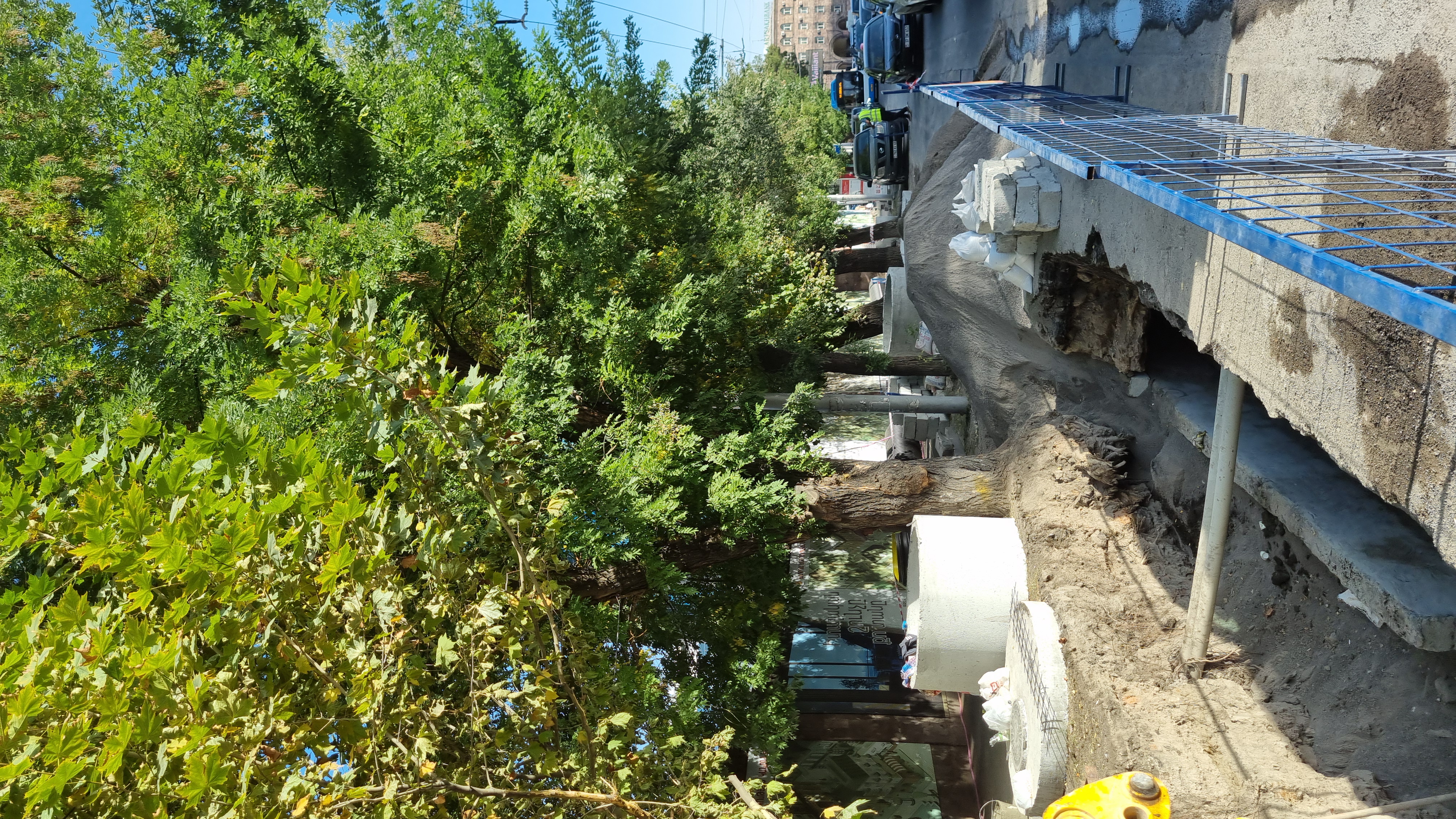
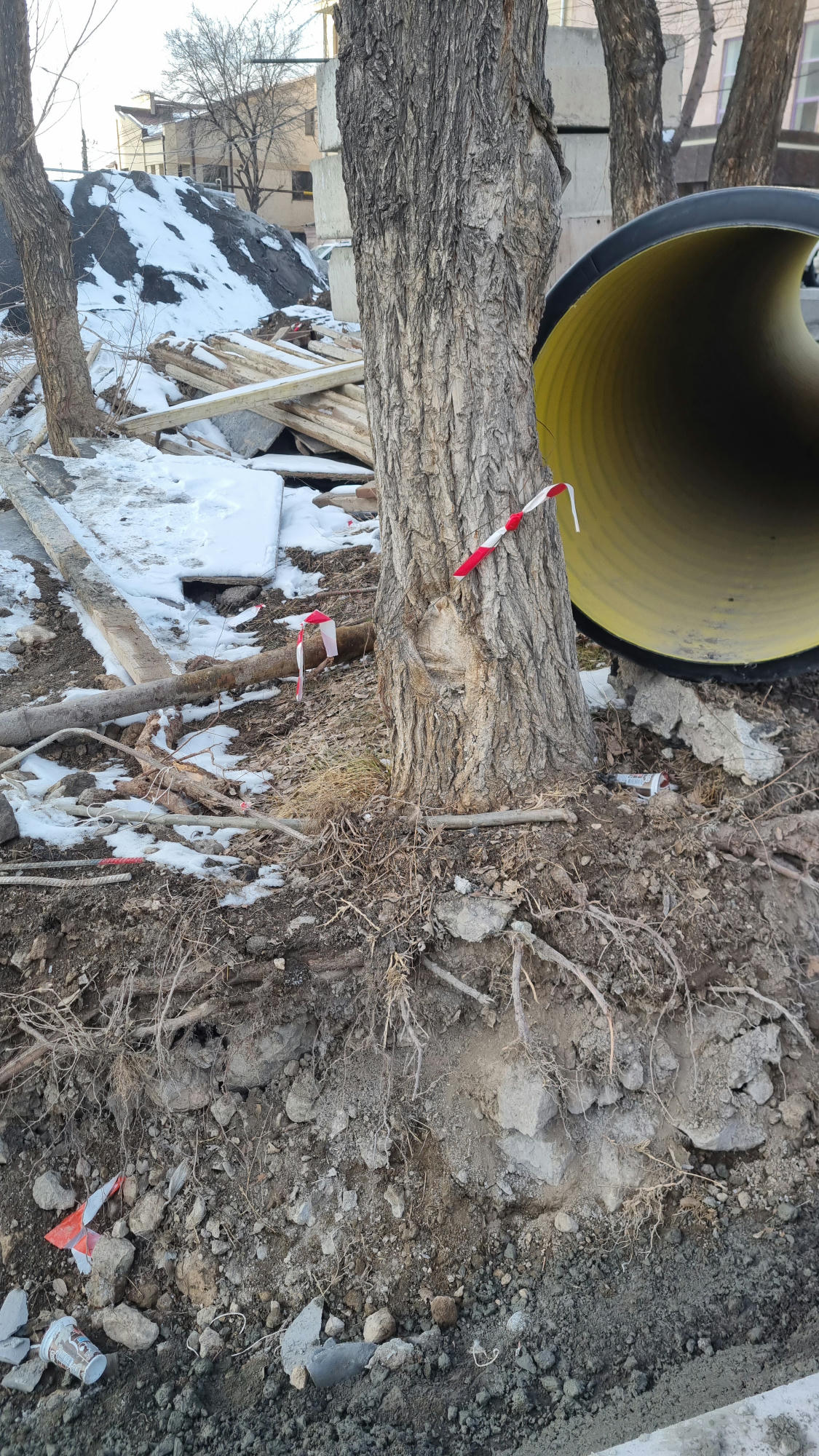
These activities are strictly regulated by city law to protect Yerevan's greenery. Trees are granted a root safety zone extending 2.0 to 3.0 meters from the trunk, as defined by Council of Elders Resolution № 405-N (Article 18). Excavation within this zone is prohibited except in emergencies involving active infrastructure failure, such as a burst pipe. Furthermore, Resolution № 36-N explicitly forbids damage to trees and their root systems, with violations subject to fines of 50,000 to 150,000 AMD per site.
When underground work is unavoidable, contractors are expected to employ non-destructive methods to preserve root integrity. Technologies such as pneumatic excavation, hydro-excavation, trenchless directional drilling, or careful hand digging allow for the installation of utilities without harming existing trees. If these methods are not feasible, the correct procedure is to remove the trees before work begins and replace them with standard 4+ meter saplings once the project is complete, rather than leaving a damaged and unstable tree in a public space.
What you see in the pictures above is not the only way to maintain utilities; the damage to these roots was entirely avoidable. Modern standards and technologies allow for infrastructure development that respects and preserves our urban forest.