
First coordinated planting
We successfully planted two trees on Papazyan Street!
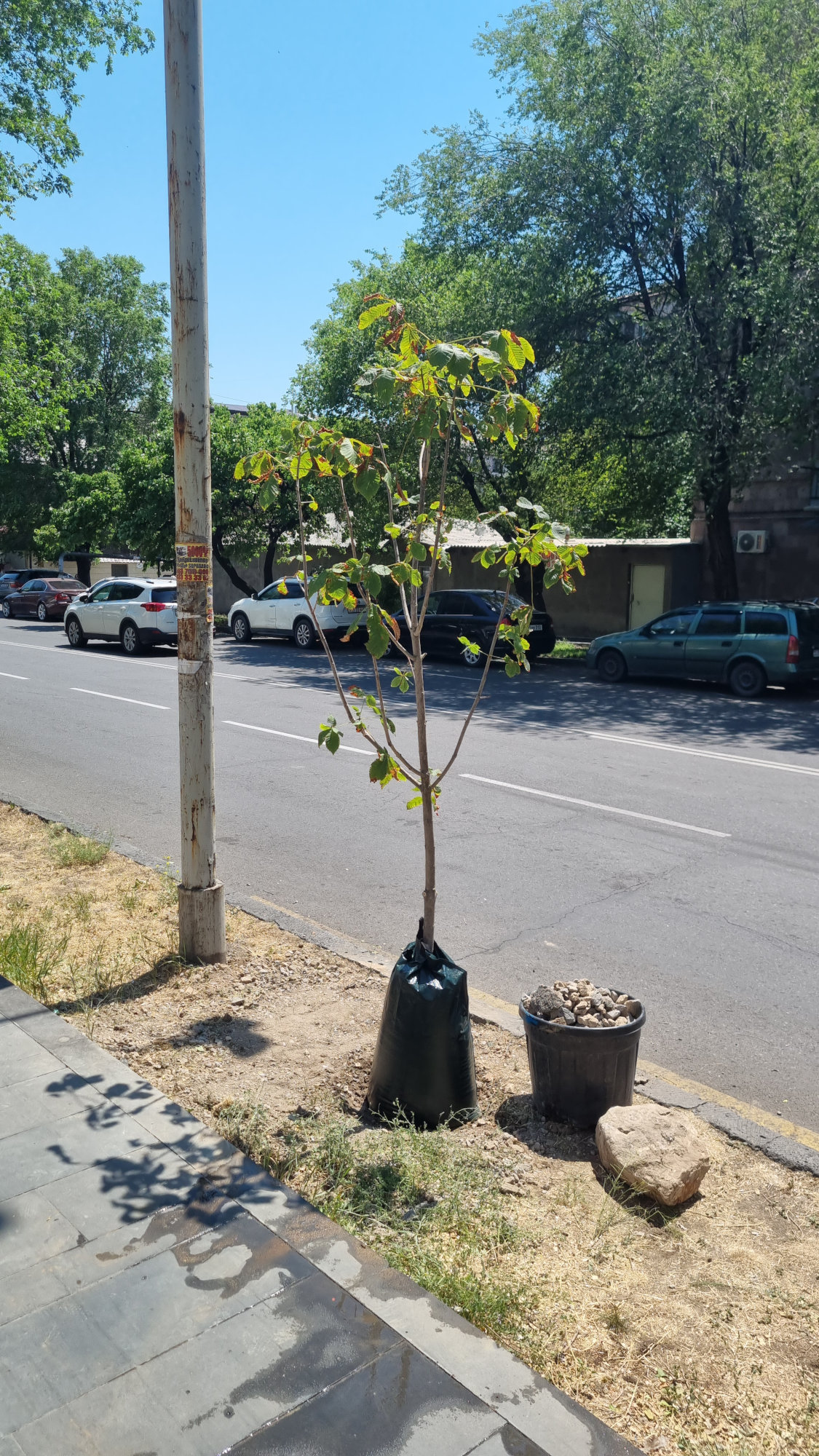
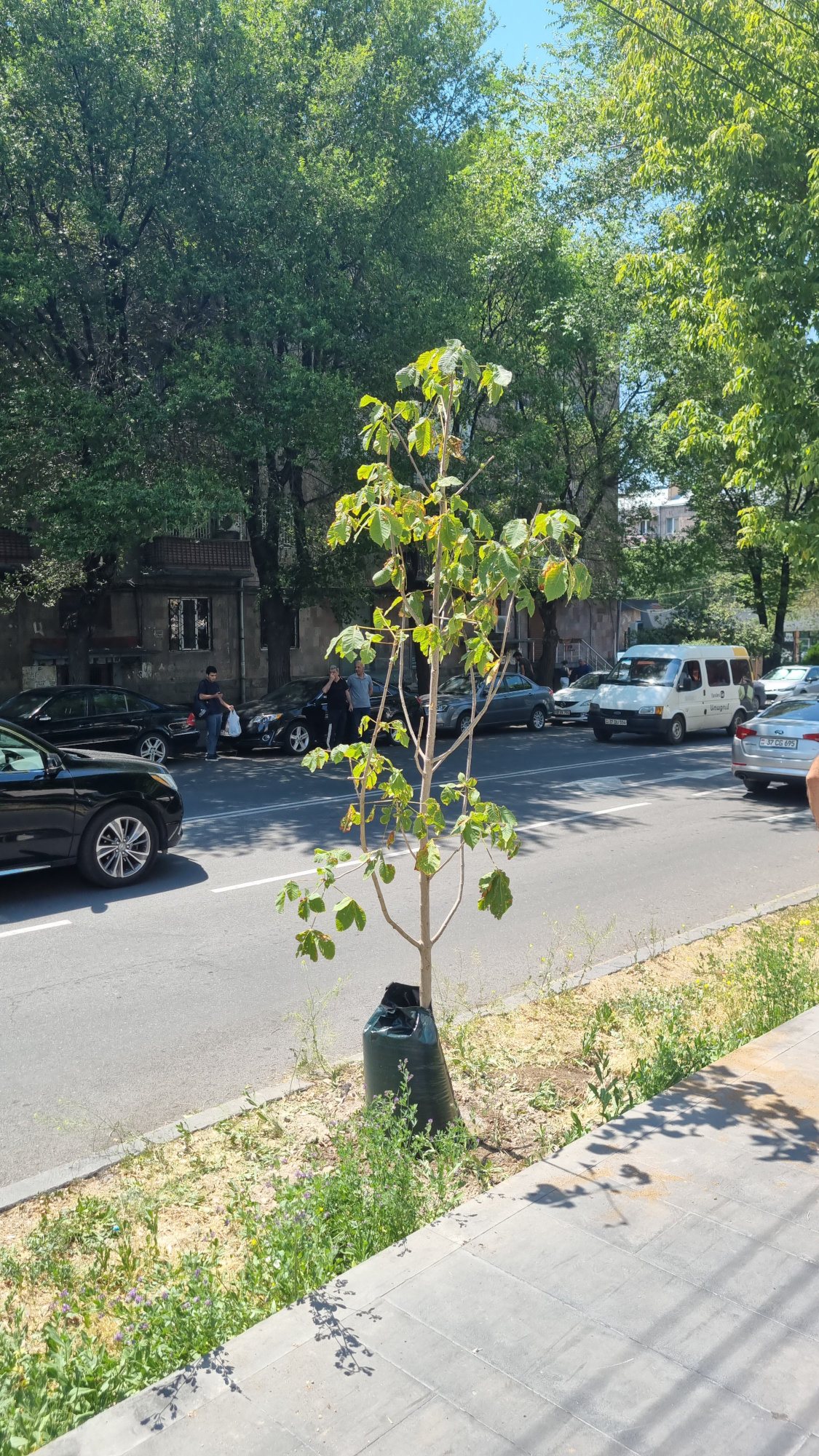
On Saturday, July 4, we planted our first trees coordinated with Kanachapatum — two horse chestnuts, 3.5 meters tall.
You might have seen that trees planted by Yerevan residents on their own initiative are sometimes uprooted by the city greening service, especially if they aren't coordinated and are on main streets. It's frustrating when all that effort and resources go to waste.
There are several practical reasons why it’s better to coordinate plantings with specialists. For example:
- the proposed location might be unsuitable if the tree blocks traffic signs or if underground utilities leave no room for roots
- the species chosen might be invasive, provide fewer ecosystem services than alternatives, or not fit the target biodiversity. We hope to see such ecological goals integrated into Yerevan’s urban planning soon
That’s why we are in talks with the City Hall and Kanachapatum to create a clear, accessible process for coordinating citizen-led street tree plantings. Planting a tree in a private yard doesn't require coordination.
After months of negotiations, we achieved a tangible result — our first coordinated planting at a site we selected.
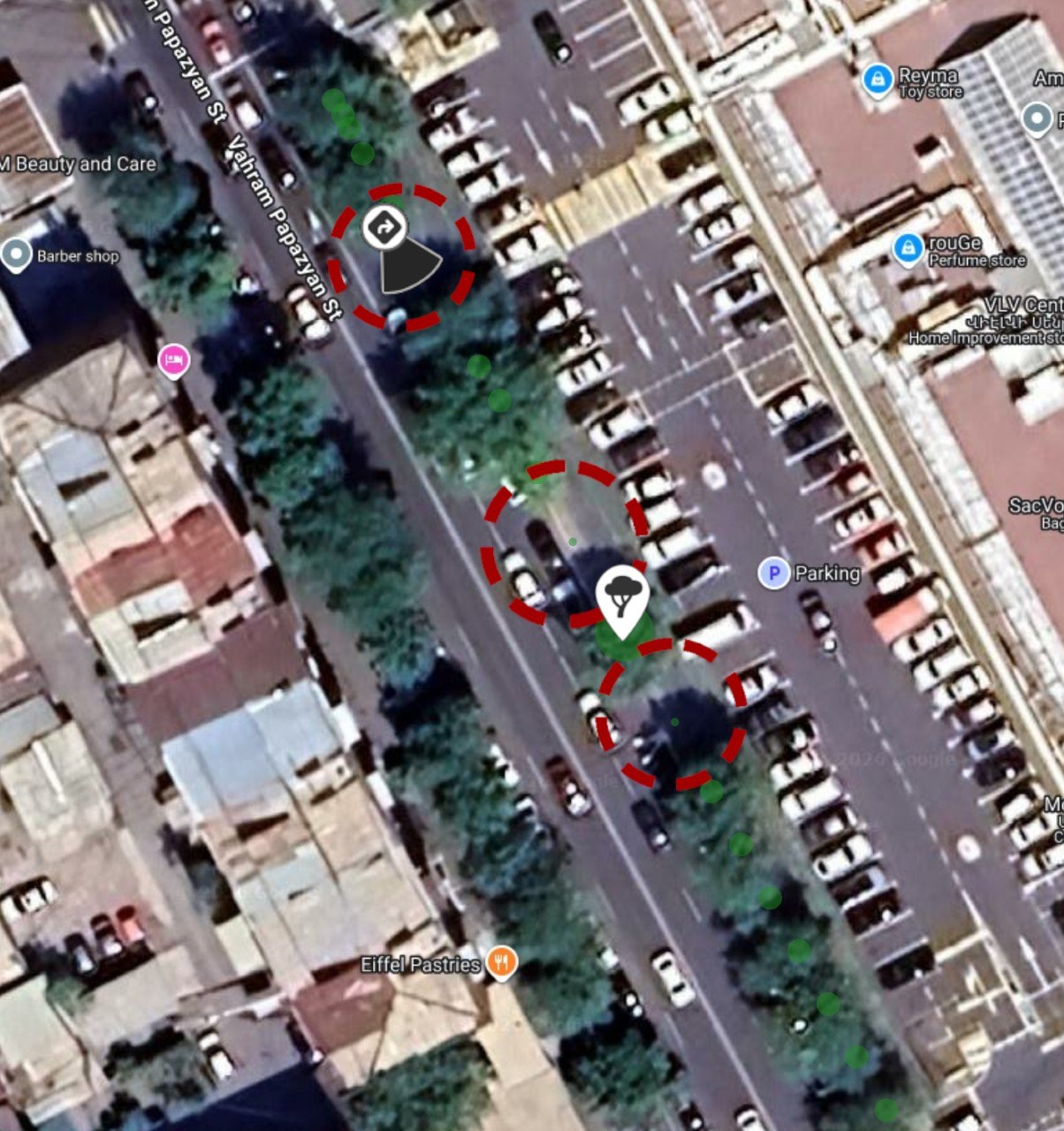
We chose a spot on Papazyan Street near Rio Mall because:
- the street is heavily used by pedestrians
- there were three gaps in the existing tree line
- two of these gaps surround a large elm that currently provides at least 75 m² of shade but is in poor condition. While the elm is still standing, we need to grow new trees to compensate for the eventual loss of its shade
- one gap wasn't suitable because a tree there would have blocked a road sign
- several elderly residents approached us, highlighting the desperate need for shade on this specific stretch
- there are water sources nearby for filling watering bags
The species and size were specified by Kanachapatum — they approved horse chestnuts for this street, and we found saplings that met their height and trunk diameter requirements.
On Friday morning, Kanachapatum’s dendrologists visited the site to approve the exact spots. By evening, the nursery delivered the saplings, which spent the night under the watch of a nearby restaurant. On Saturday morning, two more Kanachapatum employees came to oversee the planting.
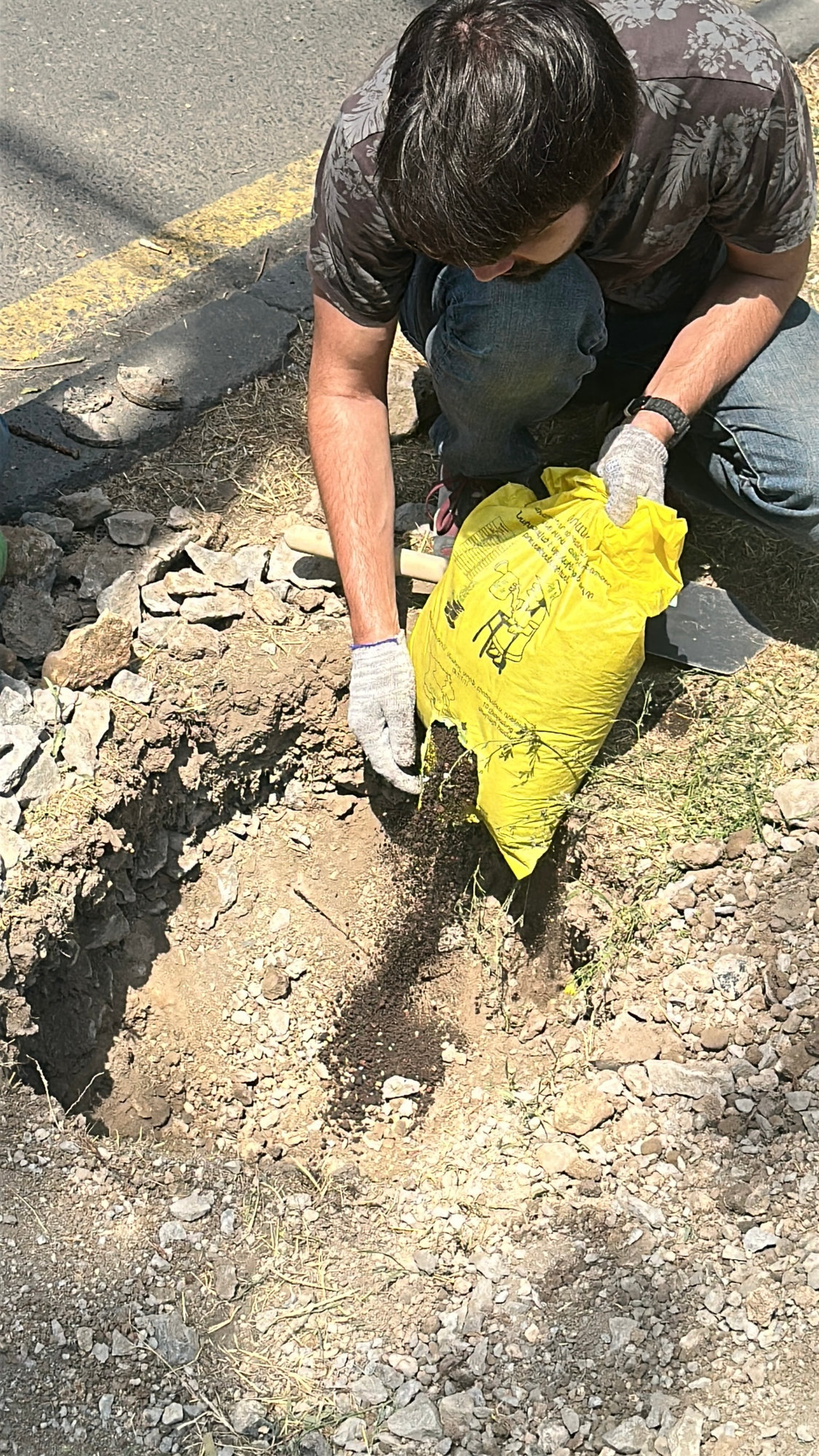
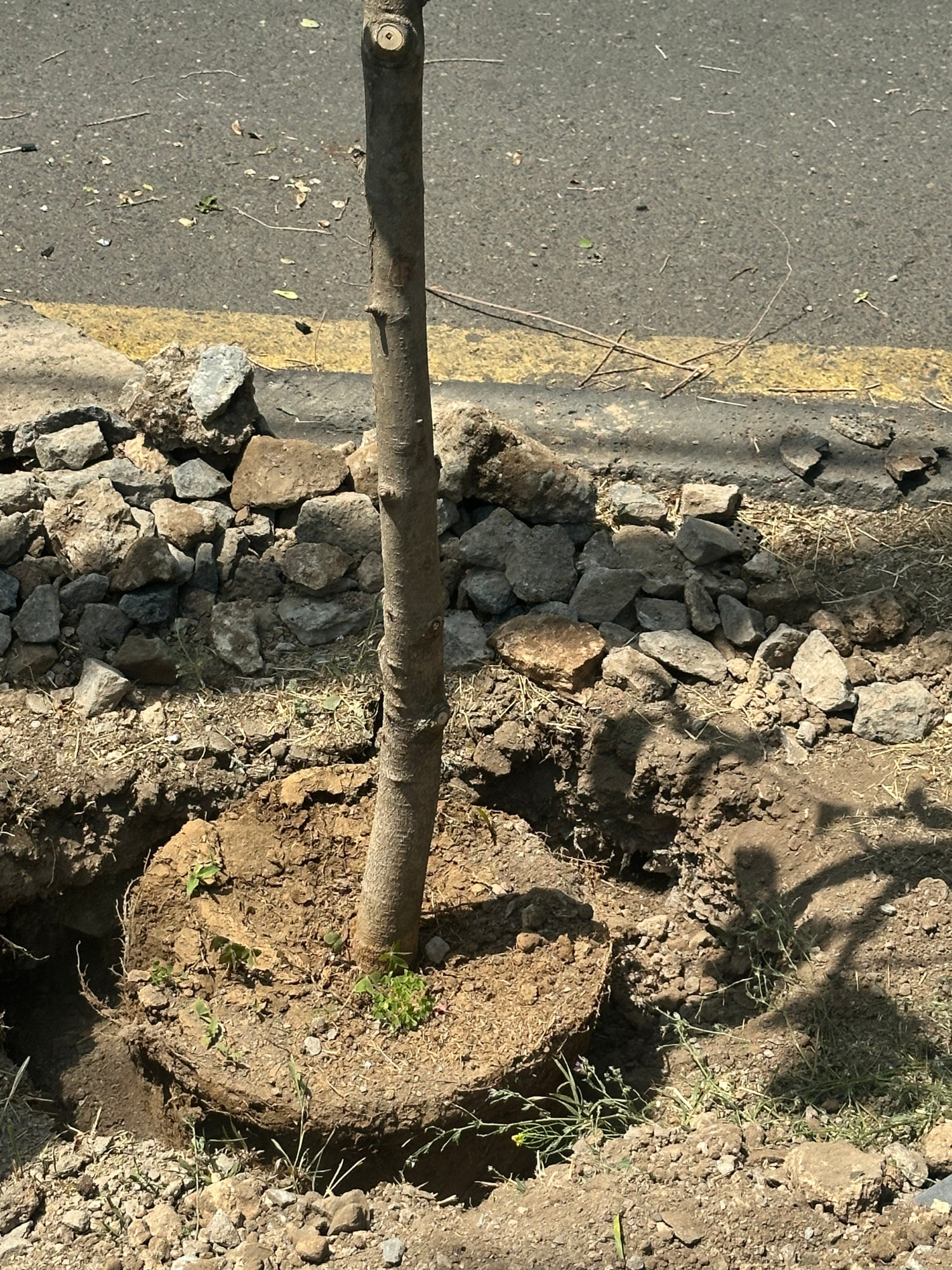
The first stage — digging the holes — is the hardest and longest (aside from the coordination itself). We ran into the expected challenge: the soil is rocky and, deeper than 10 cm, looks more like regolith than soil — largely because of construction debris left behind from past eras. A crowbar saved the day. With it, we hauled out chunks of old asphalt, tufa, "concrete nuggets," obsidian gravel, and one massive boulder. To keep these rocks off the road, we collected them in the sapling baskets.
The second stage is pretty straightforward:
- add nutrient-rich soil to the bottom of each hole
- carefully place the trunk in a vertical position
- fill the hole with soil or spread it around the surrounding area (and collect the stones)
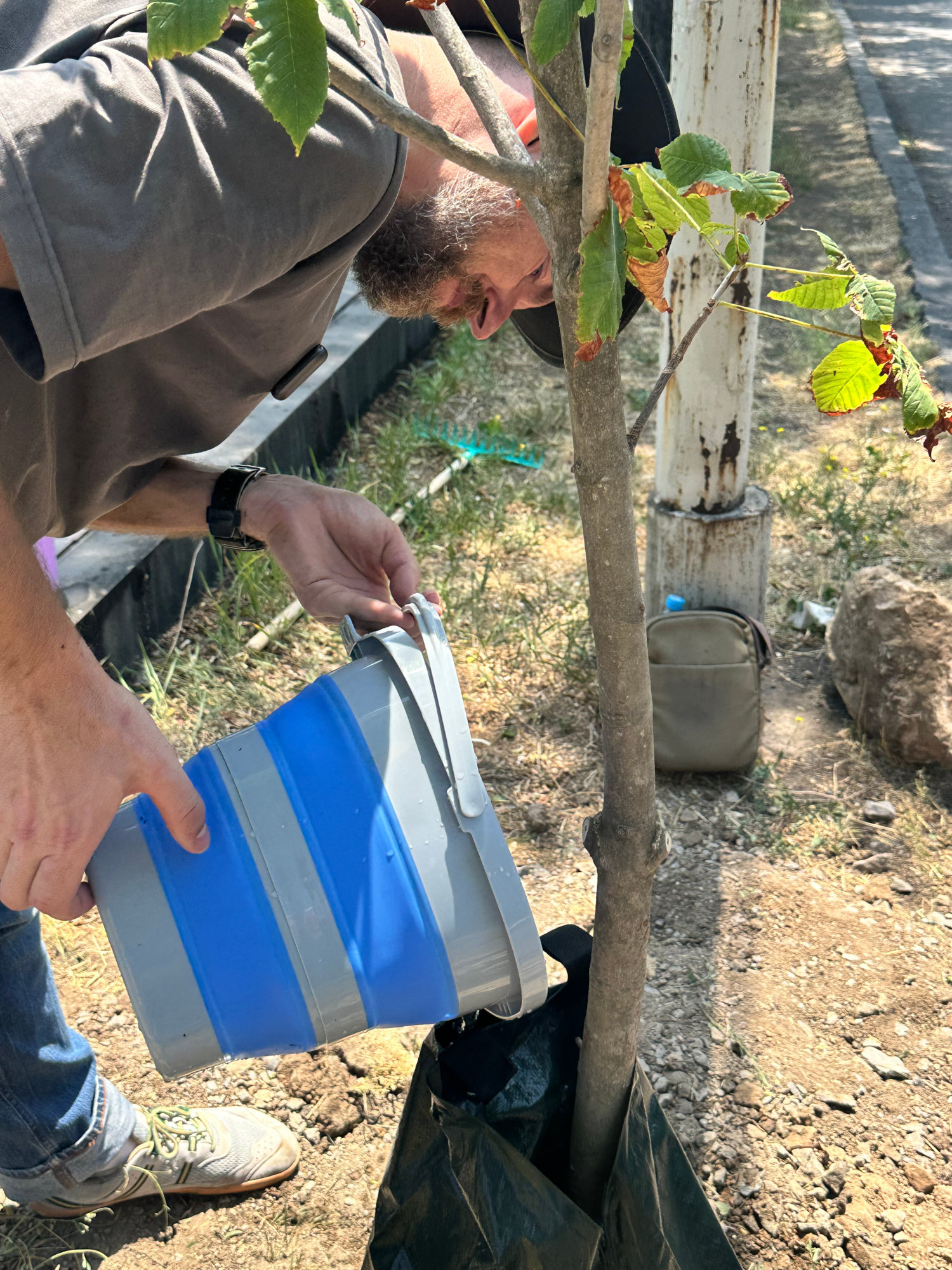
- install and fill a watering bag
- wash away any dust from the sidewalk if necessary — a thin layer can be slippery and dangerous
- celebrate!
Following tradition, we had coffee offered by Araik from the building across the street. We spent a long time chatting with him about why watering bags are better than hose watering and how to help grow Armenia’s economy.
Want to plant a tree on a street in Yerevan? Write to us!